December 3, 2025

Business
Legal Entity vs. Business License: What’s the Difference?
Clarifying SOS, DOR, EIN, & more
Understanding the essential registrations every Washington business needs.
Starting a business in Washington means navigating a few key registrations—and many entrepreneurs understandably get confused about the difference between forming a legal entity and obtaining the necessary business licenses. Although related, these filings serve very different purposes.
At Launch Industries, we help business owners understand each step so they can launch smoothly and stay compliant. Here’s a clear breakdown of what each registration does, and how they fit together.
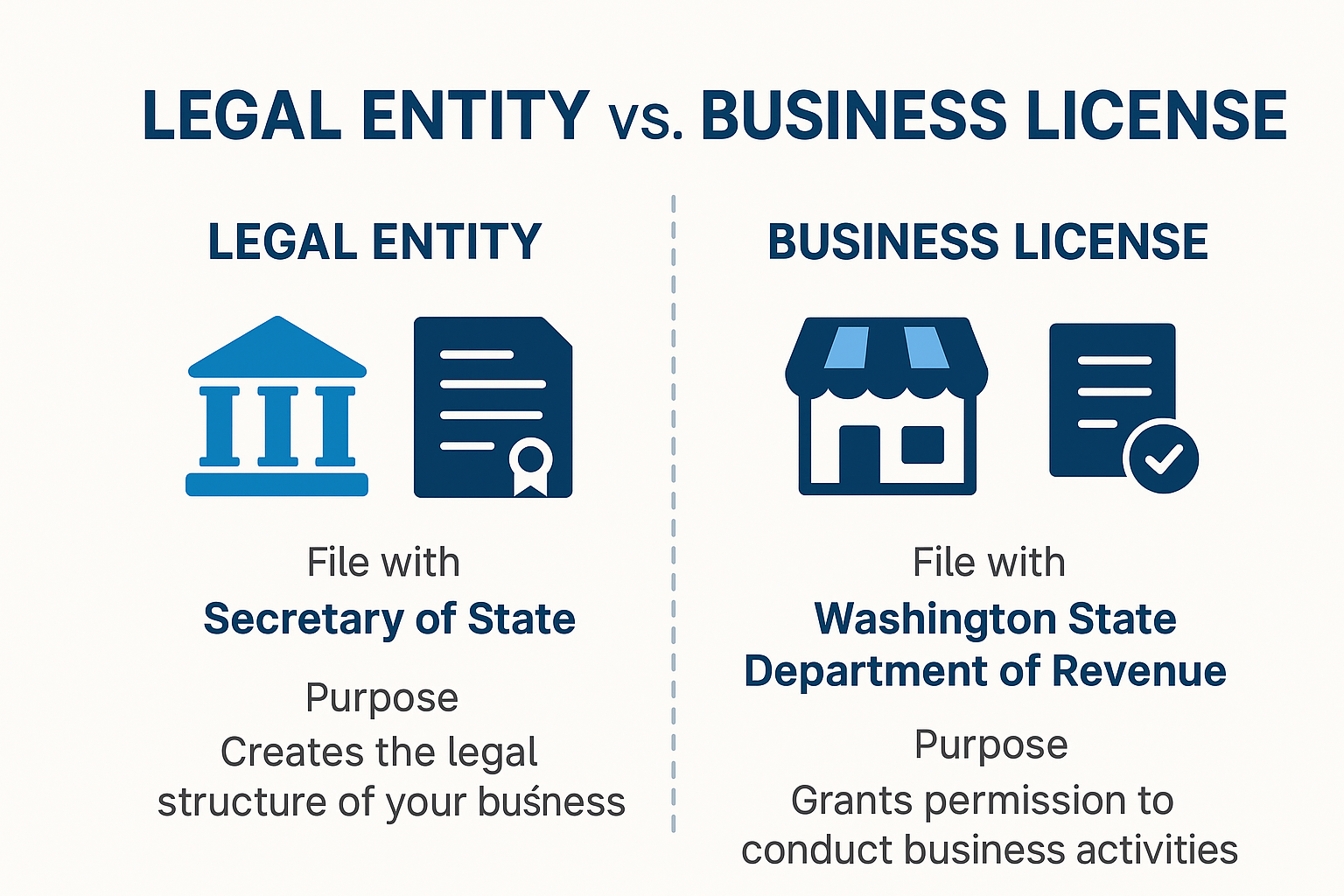
Legal Entity Registration (SOS)
Purpose:
Forming a legal entity—such as an LLC, corporation, or nonprofit—creates the legal structure of your business. This registration gives your business a legally recognized identity separate from the individuals who own it.
Filed With:
Washington Secretary of State (SOS)
What This Filing Does:
- Establishes your LLC or corporation
- Provides liability protection for owners
- Reserves your business name at the state level
- Allows you to open a business bank account
- Defines ownership and management structure (via Operating Agreement or bylaws)
Important:
SOS registration creates the entity—but it does not give you permission to legally operate the business or collect revenue. That comes next.
State Business License (DOR)
Purpose:
The state business license authorizes you to legally conduct business in Washington and registers you for state-level taxes.
Filed With:
Washington State Department of Revenue (DOR), via the Business Licensing Service (BLS); outside of Washington state, check with your state's revenue department.
What This Filing Does:
- Allows your business to legally operate in Washington
- Registers you for state taxes (e.g., B&O tax, sales tax)
- Issues or connects a UBI number
- Identifies industry-specific permits you may need (contractor, daycare, salon, etc.)
- Signals to government agencies that your business is active
Key Point:
The business license is your operational clearance to start selling, invoicing, or transacting business in the state.
City Business Licenses in Washington
In addition to state-level licensing, many cities in Washington require their own business licenses. These ensure compliance with local regulations such as zoning, local taxes, or safety requirements.
Where City Registrations Are Filed
Washington is somewhat unique because city business licensing is handled in two different systems:
A. Filed Through the State (DOR/BLS)
Over 150 Washington cities participate in the Business Licensing Service.
This means you can apply for many city licenses at the same time you apply for your state business license.
Examples include:
- Seattle
- Tacoma
- Spokane
- Bellevue
- Renton
- Kent
This combined process simplifies registration and allows renewals to happen in one place.
B. Filed through a separate system: FileLocal
A smaller group of cities require businesses to register through FileLocal, an independent licensing and tax platform.
Common FileLocal cities include:
- Tacoma (for local B&O/business taxes)
- Seattle (for tax filing, not the initial license)
- Everett
- Lake Forest Park
Important Distinction:
Some cities appear in both systems—for example:
- Seattle and Tacoma licenses are initially obtained through DOR/BLS,
- but ongoing city tax filing occurs through FileLocal.
This creates a two-step relationship with certain cities, which often surprises new business owners.
Employer Identification Number (EIN/TIN)
Alongside state and local licensing, businesses also need a federal tax identifier.
What is an EIN or TIN?
- TIN (Taxpayer Identification Number) is a general term for IRS-issued tax ID numbers.
- EIN (Employer Identification Number) is the most common business TIN.
What the EIN Is Used For:
- Opening a business bank account
- Filing federal taxes
- Hiring employees (required before you pay staff)
- Sending/receiving W-9s and 1099s
- Keeping personal and business finances separate
Where it's filed:
Directly with the Internal Revenue Service (IRS)—usually free and issued instantly online.
Important:
An EIN is often required after your entity is formed with the SOS but before you apply for your Washington State business license so the license can be linked to the correct tax ID.
How All These Pieces Fit Together
A fully compliant Washington business typically needs:
- SOS Entity Formation
Creates the business structure (LLC, corporation, nonprofit). - IRS EIN
Gives your business a federal tax ID. - Washington State DOR Business License
Authorizes you to operate and registers you for state taxes. - City Business Licenses
Required based on where you operate or conduct business.
Think of it like this:
- SOS = Birth Certificate → the business now exists
- EIN = Social Security Number → the business has a tax identity
- State Business License = Driver’s License → the business can legally operate
- City Licenses = Local Access Permits → permission to operate in specific jurisdictions
Each step matters—and skipping any of them can cause penalties, tax problems, or delays when opening bank accounts or signing contracts.
Final Thoughts
Navigating multiple agencies, systems, and requirements can feel overwhelming for new entrepreneurs, but once you understand the purpose of each filing, the process becomes much clearer.
At Launch Industries, we guide business owners through these registrations, help them stay compliant, and make sure nothing slips through the cracks.
If you’d like help forming your business or understanding which licenses apply to you, our team is here to support you every step of the way.


